
Rethinking Customer Experience and Engagement for a Global Asset Management Leader.
Company
J.P. Morgan Asset Management
Industry
J.P. Morgan Asset Management faced a significant challenge managing its extensive digital ecosystem. The organization operated numerous web properties and business platforms, each representing a different line of business with distinct objectives, and managed by different teams on disparate servers across the company.
This fragmented approach made it nearly impossible to implement platform-wide upgrades, resulting in inconsistent branding and creating confusion for both external clients and internal teams.
Our Challenge
A key challenge for this large-scale project in a complex organization was securing organizational buy-in from multiple independent business units, each with unique leadership structures and distinct business goals. This required aligning stakeholders on a shared vision for a redesign that met the needs of all constituents.
Additionally, it was critical to prioritize the sequence of upgrades to minimize disruption to ongoing operations, while managing the project to achieve ambitious goals and timelines within budget constraints.
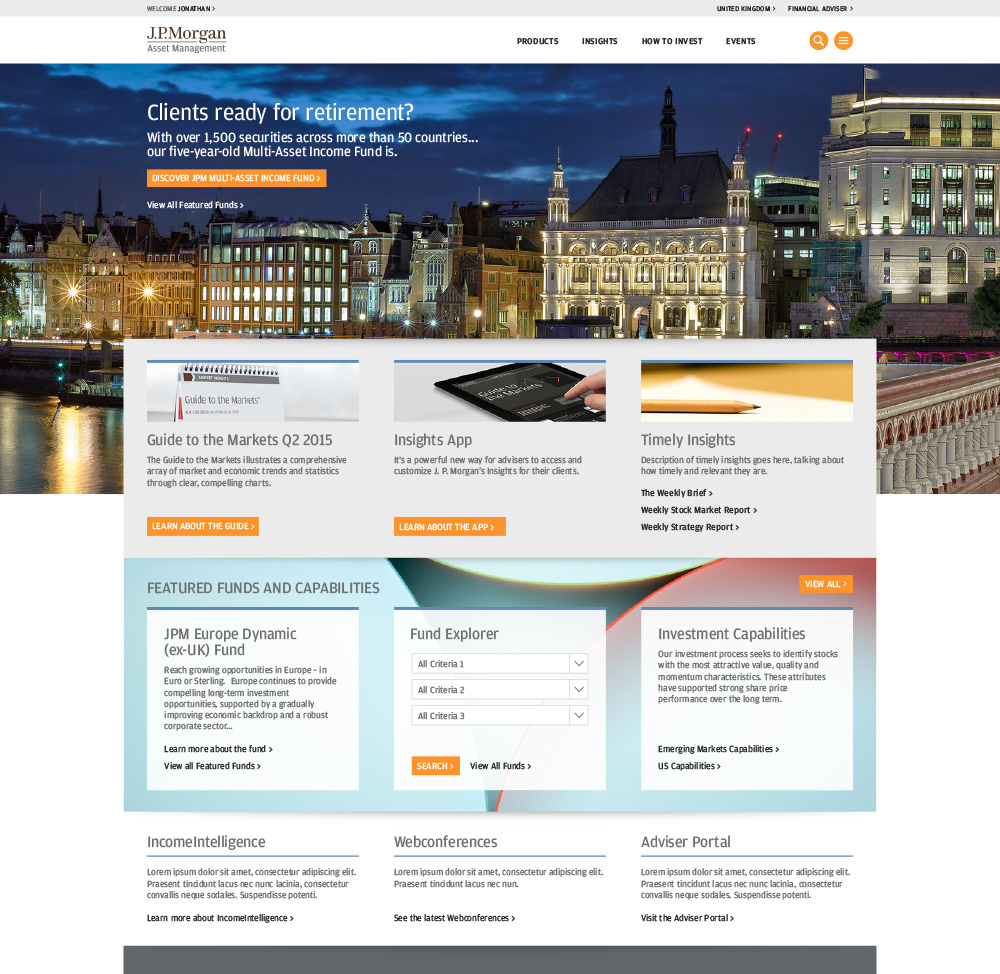
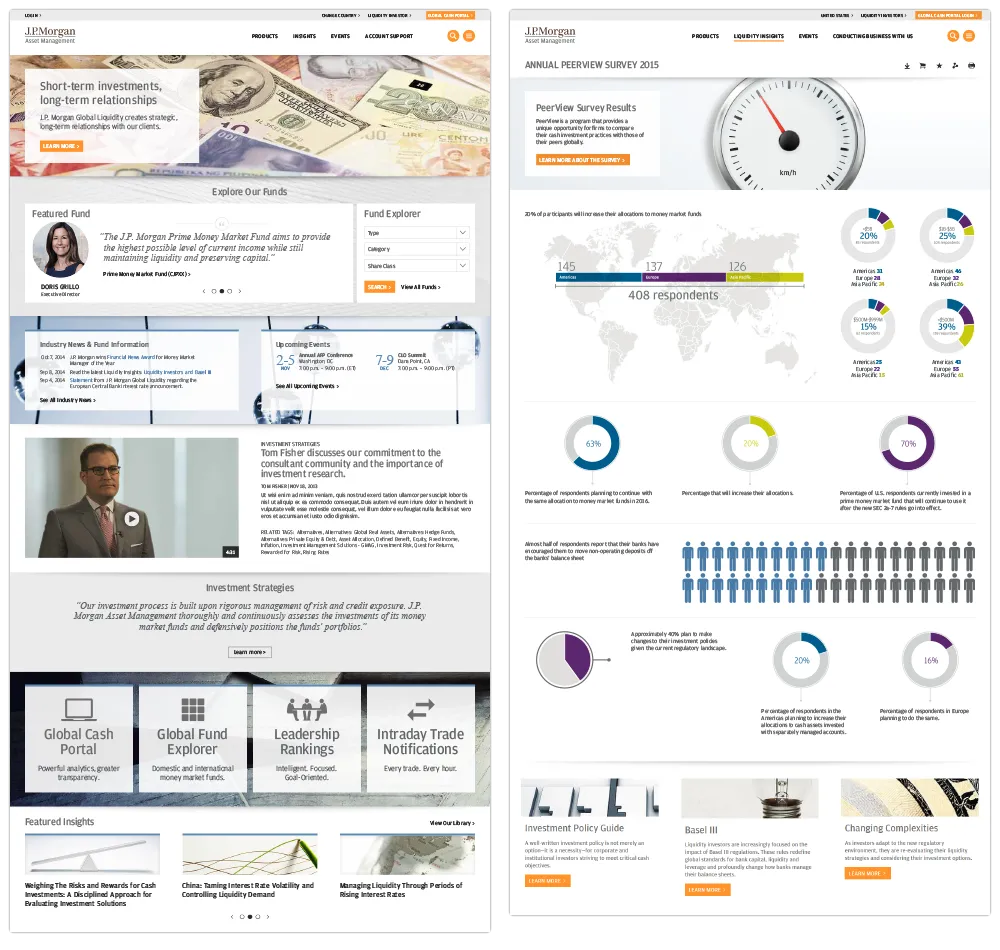
The solution involved a comprehensive approach: revamping brand messaging, refreshing visual design, enhancing customer interactions, implementing a cohesive content strategy, fully upgrading the web platform, and unifying the overall brand presence.
One Platform + One Brand
The Global Transformation of J.P. Morgan Asset Management
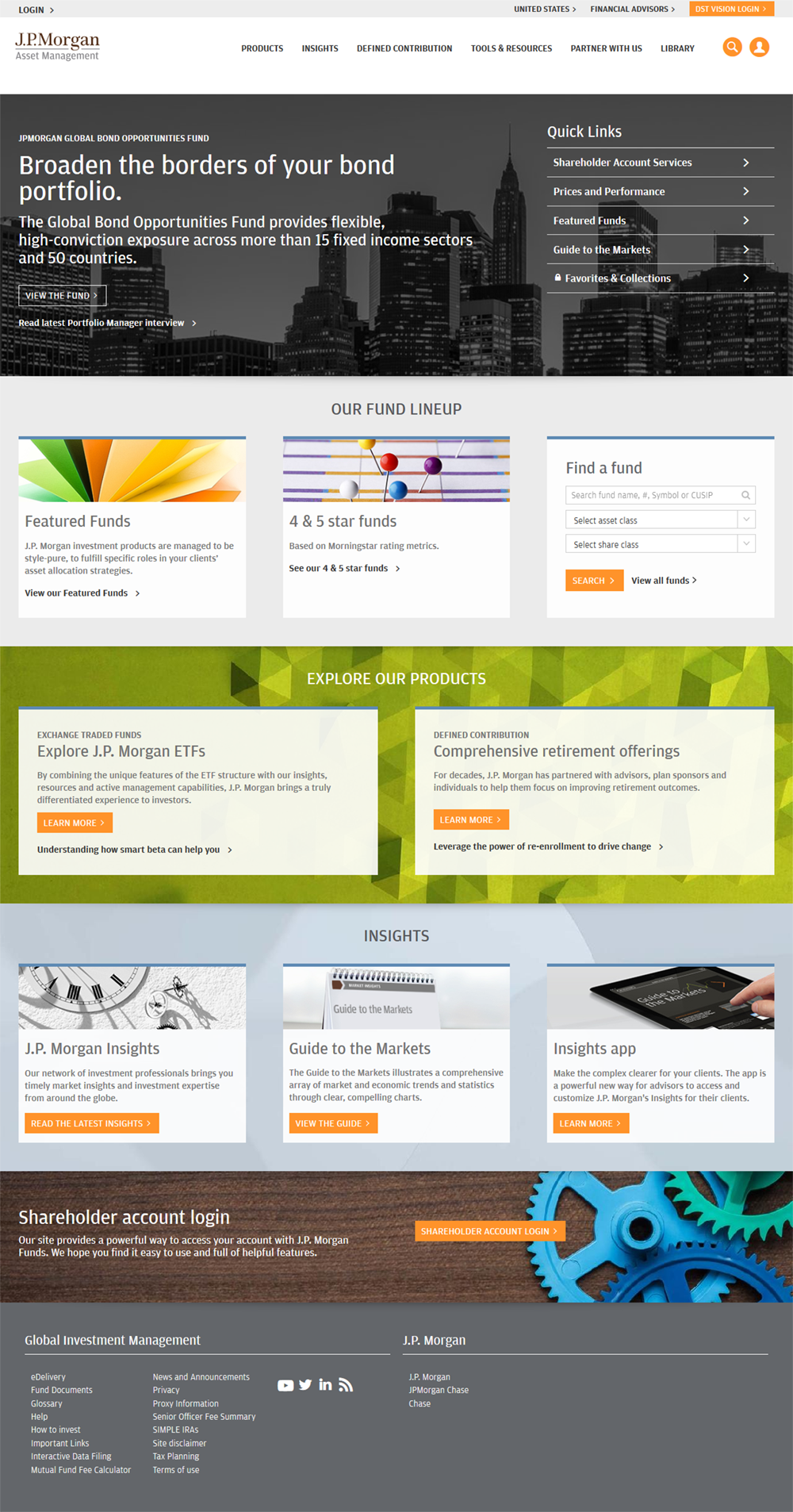
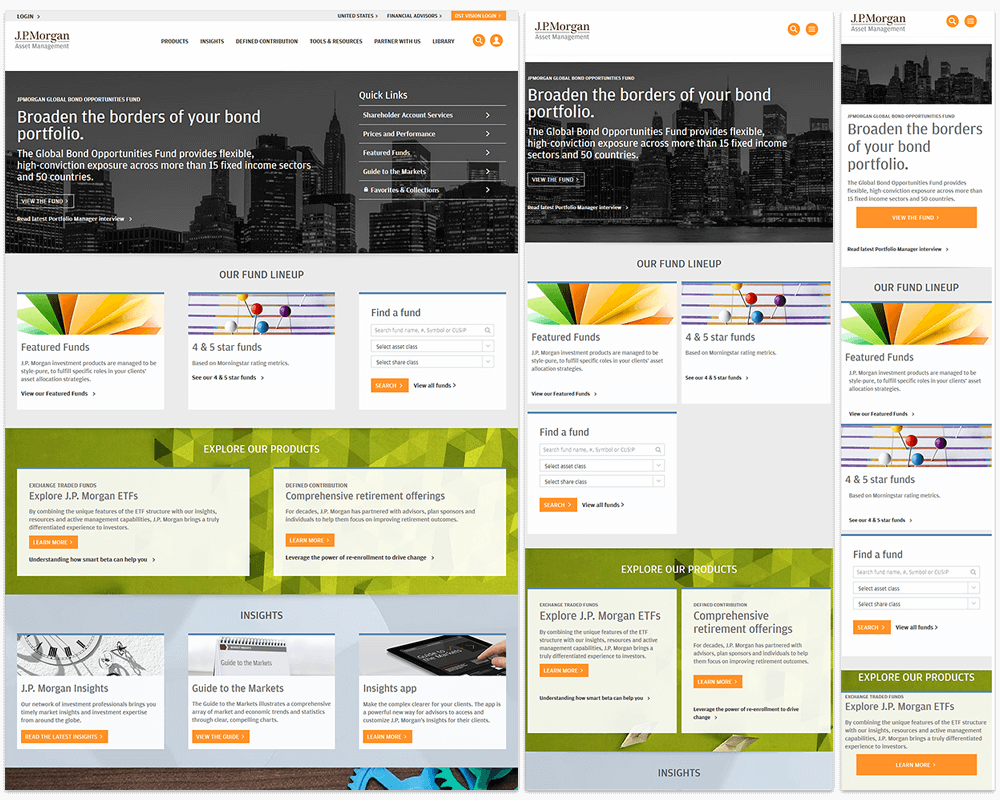
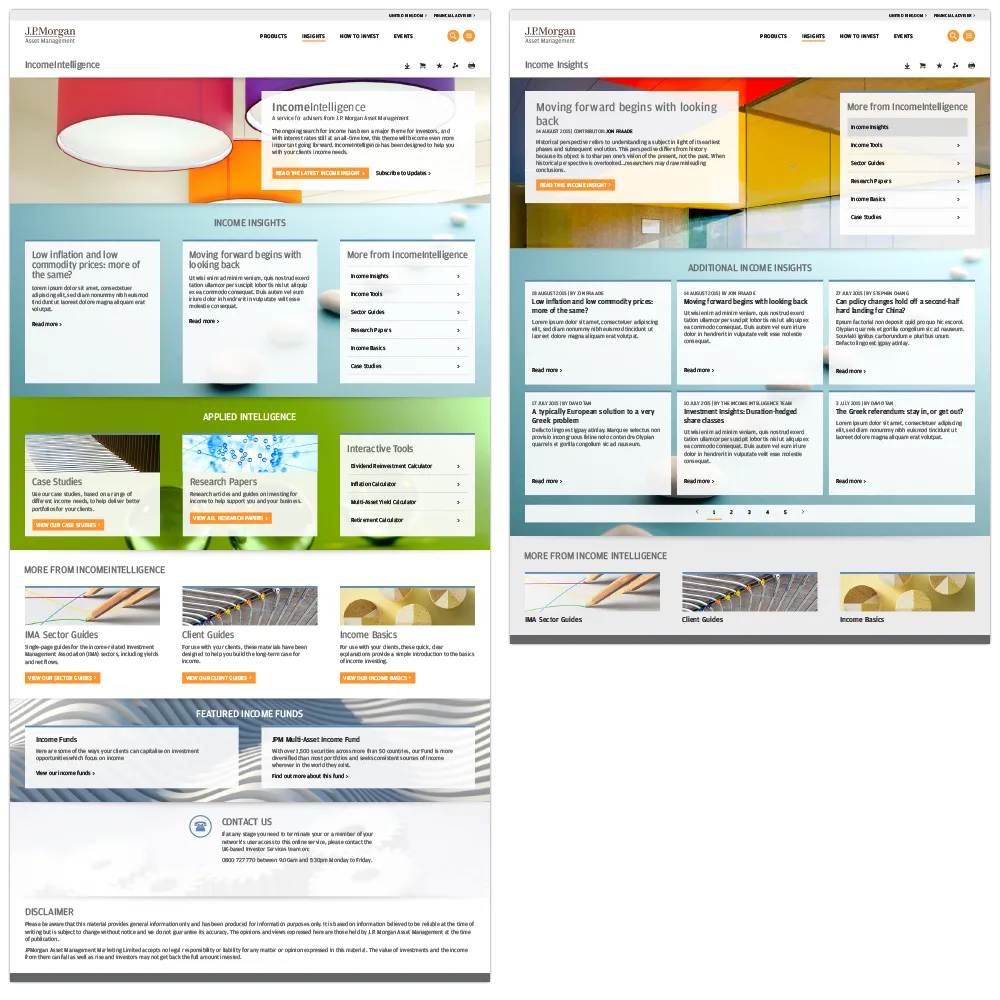
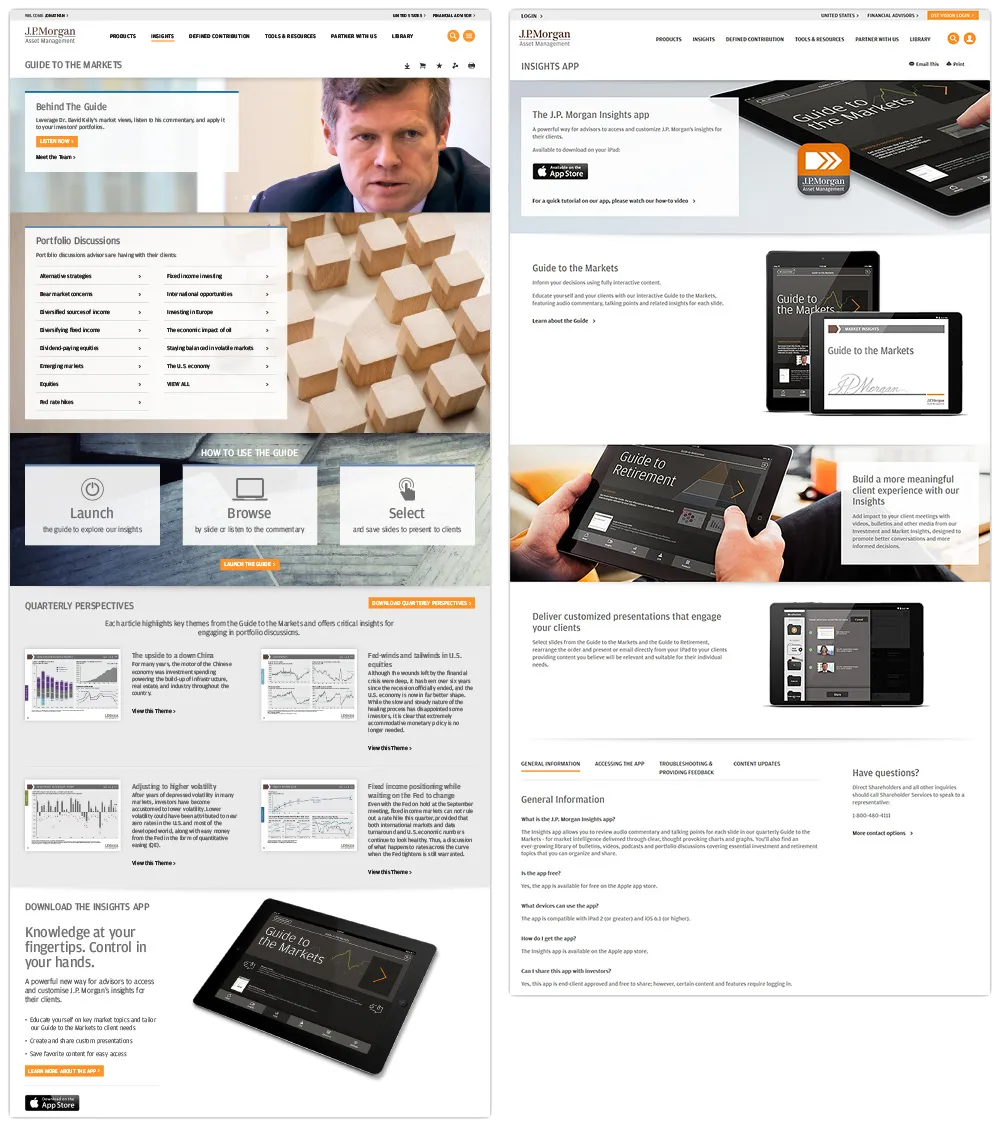
This large-scale digital transformation unified J.P. Morgan Asset Management’s global web presence into a single, high-performing platform. Over the course of more than two and a half years, the initiative consolidated 150 disparate regional and product-specific websites into one cohesive corporate experience, aligning brand, functionality, and user expectations across markets.
The effort required deep cross-functional collaboration, bringing together user experience strategists, visual designers, and web development teams, while coordinating closely with external partners and regional stakeholders. The result is a streamlined, scalable digital ecosystem that delivers a consistent brand identity, improved performance, and a more intuitive user journey for a global audience—positioning the organization for long-term growth and digital innovation.
Days
Websites
Module Designs
Design Combinations
Global Website
Communicating the brand.

05 In Conclusion
Strategic Leadership & Orchestration
The execution of this transformation required a Lead Strategist capable of navigating a complex organization at the intersection of global finance and digital infrastructure. Serving as a main architect for the integration, focus was on unifying the Institutional and Global Liquidity lines of business while simultaneously defining the digital strategy for the newly formed Exchange Traded Fund (ETF) division.
The strategic oversight involved:
- Business Relationship Management
Acting as the central conduit between independent business units to align diverse stakeholder interests with the broader corporate "One Platform" vision. - Standards Governance
Enforcing rigorous brand and technical standards across all digital properties, ensuring that the migration of 150+ regional sites maintained absolute brand integrity. - Multi-Team Management
Directing a complex ecosystem of internal product teams and external vendors, managing budgets and timelines to ensure seamless delivery without operational disruption. - Executive Reporting
Providing high-level transparency to senior management, translating technical milestones into measurable business value and organizational readiness.


Result
A Unified Global Presence
The initiative culminated in the total migration of all targeted lines of business into the One Platform + One Brand ecosystem. By successfully consolidating disparate websites and fragmented messaging into a high-performing, scalable infrastructure, J.P. Morgan Asset Management achieved a singular, world-class digital identity that served investors and intermediaries alike.
This transition not only eliminated internal confusion and technical debt but positioned the global organization for a new era of digital innovation and client engagement.